Can Stretch Therapy Improve Productivity at Work?
It’s a fair question to ask.
“Productivity” has become one of the most overused words in workplace wellbeing. Countless services promise sharper focus, happier employees and higher performance, often with little evidence behind the claims.
So it’s worth answering honestly.
Across London’s business districts—from the City and Canary Wharf to Mayfair, Knightsbridge, Chelsea and Kensington—organisations continue investing in technology, leadership development and employee wellbeing. Yet one factor is often overlooked: how physical comfort influences the way people experience their working day.
Assisted Stretch Therapy won’t transform an underperforming team, and it won’t solve problems caused by poor leadership, excessive workloads or organisational culture. Those challenges require different solutions.
What it can do is much simpler—and, arguably, much more believable.
It helps people feel physically better. And when people feel physically better, they’re often better able to concentrate on the work in front of them.
The link between comfort and focus
Attention is a limited resource.
Physical discomfort quietly competes for that attention throughout the day. A stiff neck, aching shoulders or a tight lower back may never become severe enough to stop someone working, but they constantly draw on mental energy.
Psychologists often describe this as cognitive load—the mental effort required simply to function before the task itself even begins.
Most people don’t consciously think:
“My back hurts.”
Instead they notice that they struggle to concentrate, become restless during meetings or feel mentally drained by mid-afternoon.
Physical discomfort behaves a little like background noise. You stop actively noticing it, yet it continues to occupy part of your attention.
When that physical distraction is reduced, people often find it easier to stay engaged with the task they’re already capable of doing.
What people commonly notice after a session
Everyone responds differently, but there are some common themes.
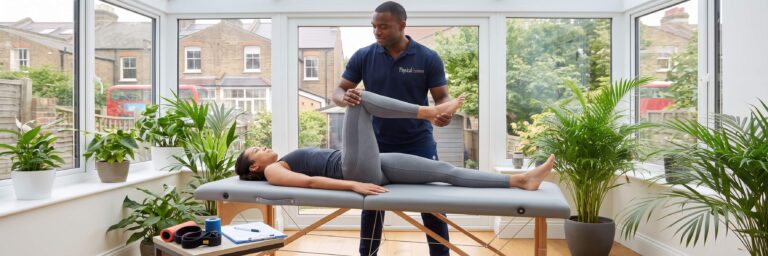
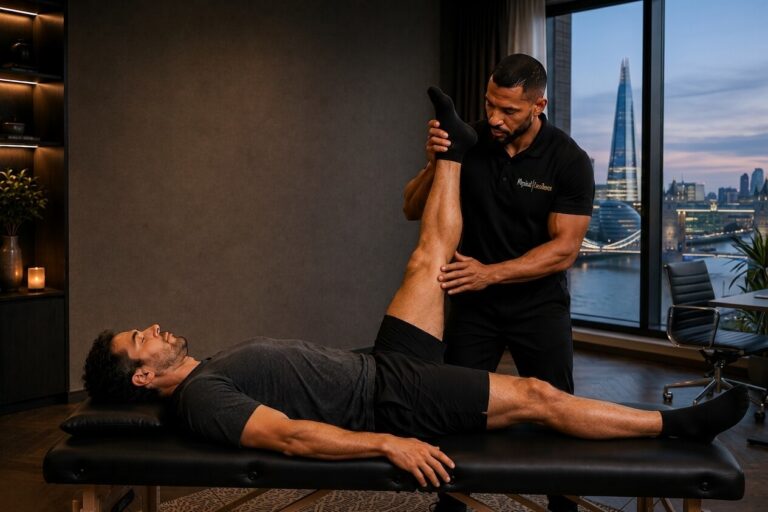
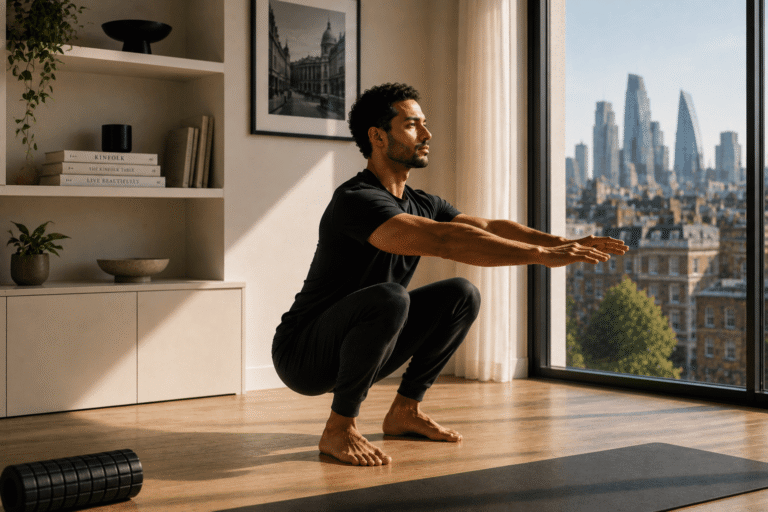
People frequently describe feeling looser, lighter and less restricted in their movement. Sitting becomes more comfortable. Standing up feels easier. The shoulders feel less tense and movement requires less effort.
There’s also a mental shift that’s difficult to measure but easy to recognise.
Stepping away from the desk for a short period, slowing down, and receiving guided assisted movement often leaves people feeling refreshed and clearer headed before returning to work.
That’s not a productivity “hack.”
It’s simply what happens when some of the physical friction of the working day is removed.
Being honest about the limits
It’s equally important to be clear about what Assisted Stretch Therapy doesn’t do.
It won’t compensate for unrealistic workloads.
It won’t replace healthy leadership, sensible working hours or good ergonomics.
And no honest practitioner should promise a measurable increase in productivity from any single wellbeing intervention.
Research directly linking one workplace wellbeing initiative to hard productivity figures remains limited.
What Assisted Stretch Therapy consistently aims to do is reduce physical tension, improve mobility and help people move more comfortably.
Whether that translates into improved focus depends on the individual, the role and the working environment.
But comfort is a genuine contributor to how people experience work—and it’s one many organisations unintentionally overlook.
Why delivering it on-site matters
Even the best wellbeing initiative has limited value if people rarely use it.
When services require employees to travel elsewhere or attend outside working hours, participation often falls.
Delivering Assisted Stretch Therapy on-site removes those barriers.
Sessions take place during the working day, allowing employees to return to work immediately afterwards without changing clothes or leaving the workplace.
It’s convenient.
It’s accessible.
And because employees experience the benefits immediately, it quickly becomes a wellbeing initiative that people genuinely value rather than simply another benefit listed in a handbook.
For a broader look at how prolonged sitting affects organisations, you may also enjoy our companion article, What Desk Work Costs Your Team.
A final thought
Workplace wellbeing doesn’t have to be complicated.
Sometimes the greatest opportunities lie in addressing the everyday physical discomfort that people gradually accept as normal.
Assisted Stretch Therapy isn’t designed to replace good leadership, sensible workloads or a positive workplace culture. It’s simply one practical way to help employees move more comfortably, reduce accumulated physical tension and return to their work feeling refreshed.
If this article has prompted you to think differently about workplace wellbeing, I’d be happy to discuss how Assisted Stretch Therapy could fit within your organisation. Every workplace is different, so conversations are always tailored to your people, your environment and your goals.
Comfortable people often focus better. It’s a modest claim—but one grounded in everyday experience rather than exaggerated promises.
Ebou Njie Founder, Physical Excellence
Specialist Assisted Stretch Therapy & Private Training | London
This article is for general information only and should not be considered medical advice.
Assisted Stretch Therapy is not a medical treatment. Individuals experiencing persistent
pain or diagnosed medical conditions should seek advice from an appropriate healthcare
professional.