You’ve probably never thought much about fascia. Most people haven’t. But if you’ve ever wondered why the same tension keeps returning despite massage, stretching, or physiotherapy — fascia may be part of the answer.
Why does this matter practically? Because how your body moves affects how you train, recover, sit, walk, and feel day to day. Understanding fascia may explain why certain patterns of tension keep returning — and what a different approach might look like.
This article explains what fascia is, why it matters, and why it has become an increasingly important focus in movement therapy and rehabilitation.
So what actually is fascia?
Fascia is a type of connective tissue that runs continuously throughout the entire body. It surrounds and connects muscles, bones, joints, nerves, and organs — forming a three-dimensional web that links everything together into one integrated system.
The easiest way to picture it is to think of an orange. When you peel one and pull apart the segments, you’ll notice a white membrane surrounding each segment and running between them. That membrane is similar in concept to fascia — it gives structure, separation, and connection all at once. Now imagine that same principle applied to the entire human body, from the soles of the feet to the base of the skull.
For a long time, fascia was considered relatively unimportant in anatomy — something that held structures together but didn’t do much else. Growing research into fascial tissue over the past two decades has begun to change that understanding significantly. Studies now suggest fascia may play a meaningful role in how the body senses movement, how forces are transmitted through the body, and how restrictions accumulate over time.
Why fascia matters for how you feel
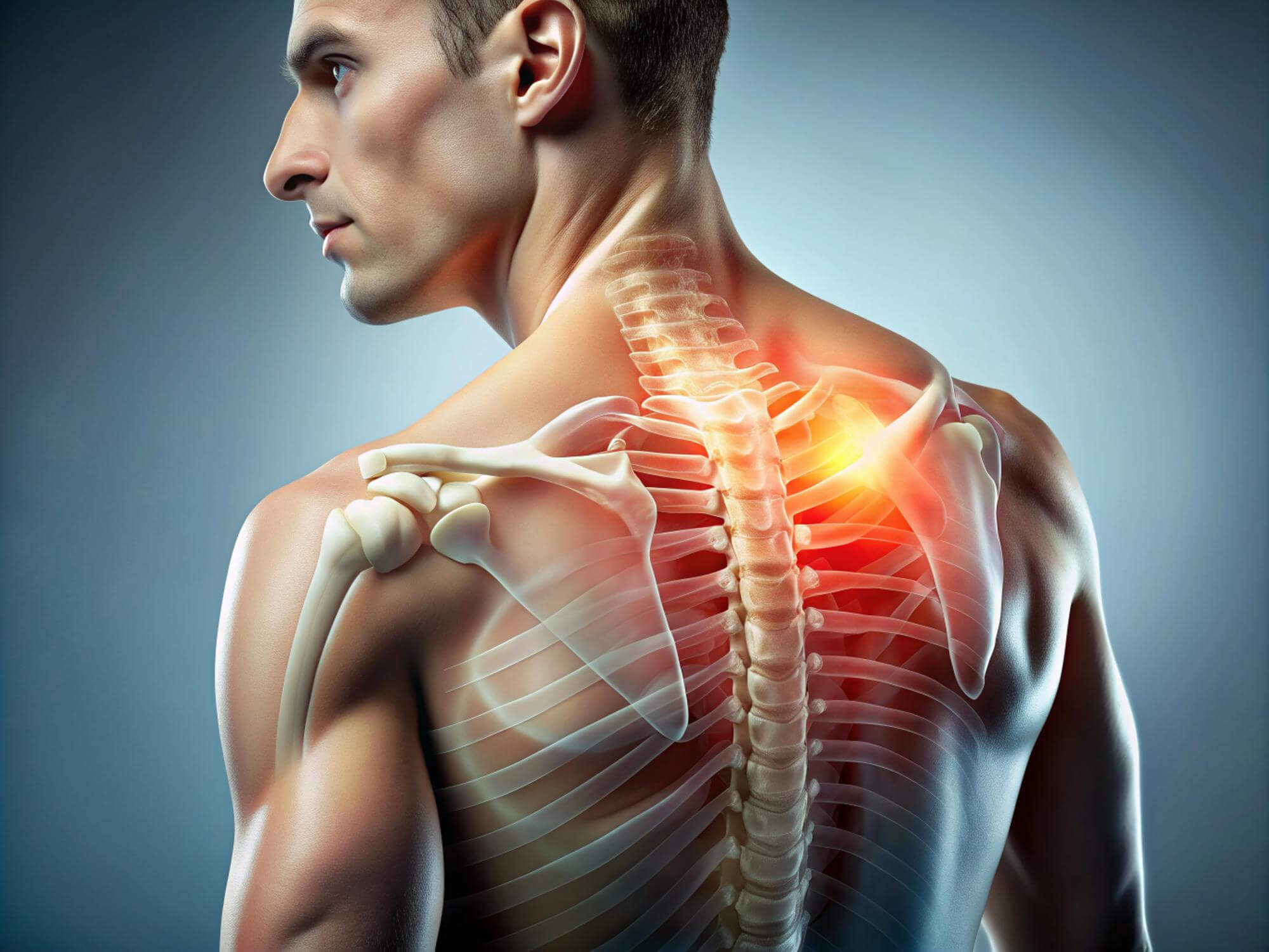
Fascia doesn’t exist in isolated segments. It runs in continuous lines — often referred to as connective tissue pathways — that connect distant parts of the body. The fascia running along the back of the body, for example, connects the soles of the feet through the calves, hamstrings, lower back, and up through the back of the skull.
This connectivity is why tension does not always stay where it starts. A restriction in the calf can pull on the hamstring. Tightness in the hip flexors can contribute to lower back discomfort. A restricted chest can affect how the shoulders move and how deeply someone breathes.
One pattern that comes up regularly when working with clients is that people are often surprised to find that the area causing discomfort is not always where the restriction originates. The body compensates quietly — sometimes for months or years — before something becomes noticeable enough to seek help.
This is one reason why treating a single area repeatedly can bring only temporary relief. If the surrounding fascial connections remain restricted, the problem tends to return.
What can affect fascia
Fascia responds to how the body is used — and how it isn’t. Several factors are thought to influence how fascial tissue behaves over time.
Sustained posture
Spending long periods in the same position — at a desk in an office, in a car, on a plane — can gradually influence how fascial tissue organises itself over time. The body adapts to the positions it is repeatedly placed in. This is something that comes up regularly with people balancing office work, commuting across London, frequent travel, and demanding schedules.
Repetitive movement patterns
Training the same movements repeatedly without addressing recovery or mobility can lead to fascial tissue becoming less pliable in certain areas.
Stress and the nervous system
Research suggests a relationship between the nervous system and fascial tissue — with sustained stress potentially contributing to increased tension throughout the fascial system.
Hydration
Hydration is thought to influence tissue quality and how freely structures move, although researchers continue to study the full nature of this relationship.
Injury and Recovery
Following injury, fascial tissue can form adhesions or areas of reduced mobility as part of the healing process. These can sometimes persist beyond the point at which the original injury has healed.
How does fascial stretch therapy relate to this?
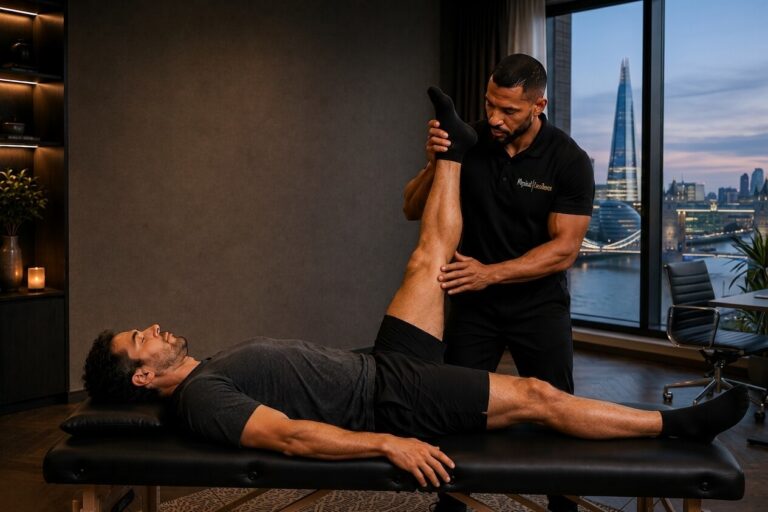
Fascial Stretch Therapy — FST — is a table-based assisted stretch method that works specifically with the fascial system rather than targeting individual muscles in isolation.
Rather than focusing on a single tight area, FST works through the connective tissue pathways — the continuous lines of connective tissue that run throughout the body. The aim is to address restrictions at a system level rather than treating symptoms in isolation.
Sessions take place fully clothed on a professional treatment table. The therapist guides the body through a series of slow, assisted movements — working with the nervous system rather than against it. There is no forcing and no pain involved.
For more detail on what a session involves, visit the Assisted Stretch Therapy page.
Where did FST come from?
Fascial Stretch Therapy was developed in the United States by Ann and Chris Frederick at the Stretch to Win Institute in Arizona — originally working with elite athletes and Olympic-level performers. Over time it has been adopted by physiotherapists, athletic trainers, and wellness practitioners internationally.
It is now available in London — including as a mobile service delivered directly to clients at home or in their workplace — bringing a method developed for high-performance athletes into everyday practice for anyone looking to move and feel better.
Common questions about fascia
Not directly — fascia doesn’t have the same type of nerve endings that allow you to feel individual muscles contracting. However, fascial tissue does contain sensory receptors, and restrictions in the fascial system can contribute to sensations of stiffness, tightness, or discomfort — though the relationship between fascial restriction and perceived sensation is still an area of ongoing research.
They are related but different. Tendons connect muscle to bone. Ligaments connect bone to bone. Fascia is the broader connective tissue network that surrounds and connects all of these structures — and much more — throughout the body. They are all made of similar collagen-based tissue but serve different structural roles.
To some degree, yes — fascial tissue responds to how everyone uses their body over time. The degree to which restrictions develop and whether they become noticeable varies considerably from person to person depending on lifestyle, movement habits, stress levels, and many other factors.
Understanding fascia is the first step in understanding why some tension is harder to shift than it seems. The following blogs in this series explore how fascial stretch therapy applies to specific situations — from desk workers and athletes to people dealing with chronic lower back tightness or looking to support their recovery.
— Ebou Njie
Stretch Therapist · London
If you have questions or would like to arrange a complimentary consultation — get in touch.
hello@physical-excellence.com · 077 7007 2333
Assisted stretch therapy is a wellbeing service and is not a medical treatment. It is not intended to diagnose, treat, or cure any condition. Please consult your GP or a qualified healthcare professional if you have any health concerns before booking.