Almost everyone has been told to “sit up straight.” Shoulders back. Chest up. Don’t slouch. It’s some of the most common advice people receive — and, for many, some of the least effective.
Most people can improve their posture for a minute or two. Then, without even realising it, they gradually return to exactly how they were sitting before. That isn’t a lack of discipline. It’s usually a sign that posture is far more about how your body moves than how hard you’re trying.
Across London, from Chelsea and Kensington to Knightsbridge, Mayfair and the City, I regularly meet people who believe they simply have “bad posture”. More often than not, what they’re experiencing is the gradual effect of years spent sitting, travelling, looking down at phones or simply repeating the same positions every day — not something that’s permanently wrong with their body.
What posture actually is
Posture isn’t a position you force. It’s the position your body naturally settles into when you stop thinking about it. That natural position is influenced by your mobility, your movement habits and the amount of time you spend in particular positions throughout the day.
If the muscles and connective tissues around the hips, chest and shoulders gradually become tighter, standing or sitting upright requires more effort. The body naturally chooses the easiest position available. Unfortunately, after years of sitting, driving, travelling or working at a computer, that easiest position often becomes one with rounded shoulders, tighter hips and a less upright spine.
For a deeper explanation of how prolonged sitting contributes to these changes, you may also enjoy What Sitting All Day Does to Your Body.
Why “just sit up straight” rarely works
This is why posture reminders usually fail. When you consciously pull yourself upright, you haven’t removed the restriction. You’ve simply asked your muscles to work harder against it.
That effort soon becomes tiring. As soon as your attention moves elsewhere, your body returns to the position that feels easiest. Good posture shouldn’t feel like hard work. It should feel natural.
Why posture affects more than appearance
Many people think posture is mainly about how they look. In reality, it often influences how they feel.
A more rounded position can leave the neck, shoulders and upper back carrying unnecessary tension throughout the day. It may also make breathing feel shallower, as the chest becomes less able to expand comfortably and breathing gradually shifts higher into the upper chest.
The goal isn’t to create a perfectly straight spine. It’s to create a body that can move comfortably through a variety of positions without one becoming permanently dominant.
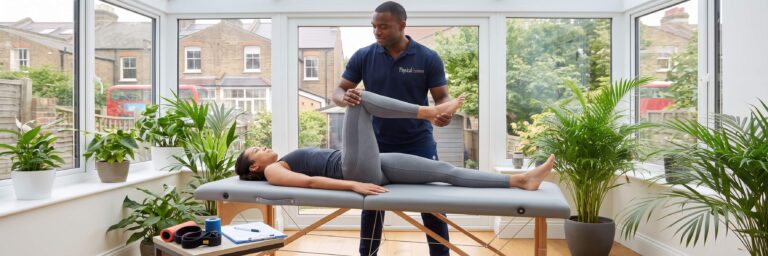
What Assisted Stretch Therapy can help with
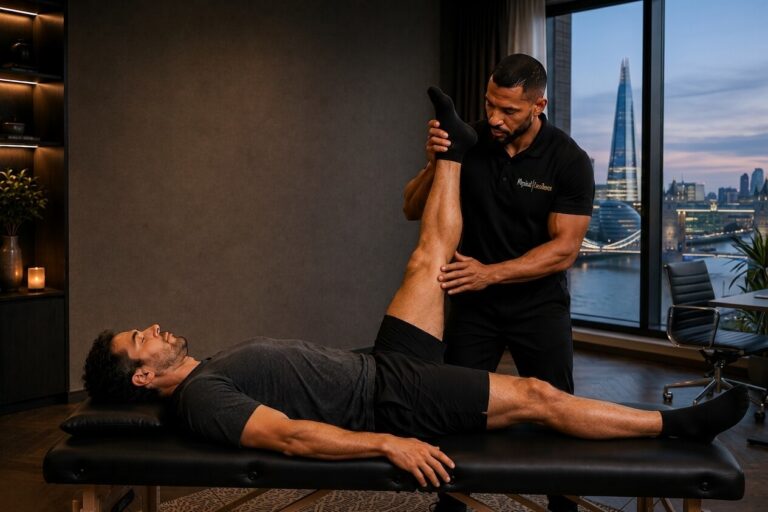
Here’s the honest answer. Assisted Stretch Therapy doesn’t “fix” posture. It improves the movement available to your body.
As mobility improves through areas such as the hips, chest, shoulders and upper back, maintaining a more upright position often becomes easier because your body is no longer working against the same restrictions.
Rather than forcing better posture, you’re removing some of the physical reasons good posture felt difficult in the first place. That’s an important difference.
Where the right exercises come in
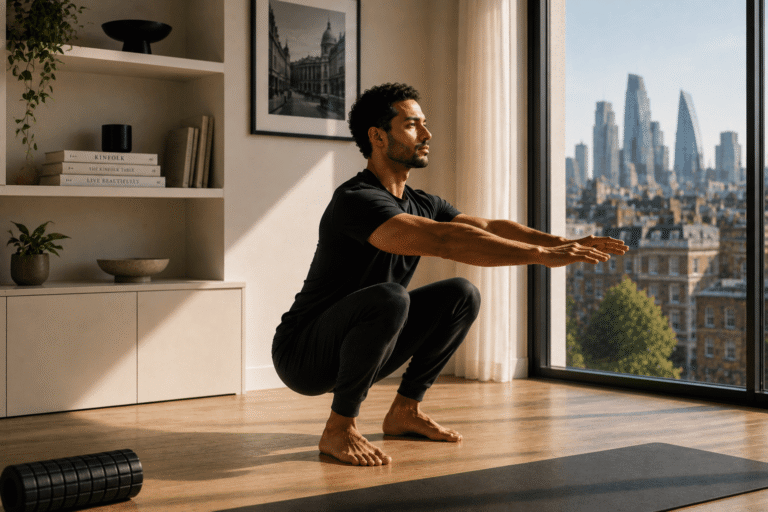
Restoring range is one half of the work. Holding a better position takes a second half — training the muscles that keep you upright, and building the habit of using the range you’ve regained.
This is the part with the most research behind it. In studies of desk and phone users, research consistently shows that combining two things — stretching the tight areas and strengthening the underused ones — can measurably improve common patterns like forward-head and rounded-shoulder posture over several weeks.
On the strengthening side, the same handful of exercises comes up again and again:
- Chin tucks, to switch on the deep muscles at the front of the neck.
- Rows and face pulls, to strengthen the muscles that draw the shoulder blades back and down.
- External rotations, for the often-neglected muscles at the back of the shoulder.
On the lengthening side, it’s usually the chest and the front of the shoulders that need opening up — which is exactly the deeper, assisted work Stretch Therapy is built for.
The pattern in the research is consistent: it’s the combination that works, not any single stretch or exercise on its own. Stretch Therapy restores the range; the exercises train your body to own it. Do one without the other and the results tend to be smaller and shorter-lived.
Two honest caveats are worth keeping in mind. First, these improvements last as long as the work continues — posture isn’t corrected once and then locked in; it’s maintained. Second, better posture is about moving and feeling more comfortable, not about “fixing” pain. The link between posture and pain is more complicated than it’s often made to sound, so it’s wise to be wary of anyone promising that a posture fix will cure an ache.
If you’d like to try some of these yourself, the NHS has a simple, free guide to fixing common posture habits, with clear step-by-step instructions and a short video — a sensible place to start.
As always, ease off anything that hurts, and if you’re dealing with pain or a diagnosed condition, get individual guidance before starting.
What it doesn’t do
It’s equally important to understand what Assisted Stretch Therapy can’t do.
It won’t strengthen weak muscles on its own. It won’t replace regular movement throughout the day. It won’t correct a poorly designed workstation. And it won’t create perfect posture overnight.
Mobility is one part of the picture. Strength, movement habits, ergonomics and regular changes of position all contribute to how comfortably you hold yourself throughout the day.
A few things to notice
These aren’t diagnoses — just common patterns.
- You can sit or stand tall, but only for a short time before gradually rounding again.
- Holding good posture feels tiring rather than comfortable.
- Your shoulders gradually creep forwards as the day goes on.
- You often notice stiffness across the chest, shoulders or upper back after working, driving or travelling.
A final thought
Posture isn’t something you force. It’s something your body allows. The easier it becomes to move well, the easier it becomes to sit and stand comfortably without constantly reminding yourself to “sit up straight.”
Assisted Stretch Therapy isn’t about holding you in one perfect position. It’s about improving the movement that allows better posture to feel more natural — and, paired with the right strengthening work, more lasting.
If you’d like to understand what may be limiting your movement, I’d be happy to discuss how Assisted Stretch Therapy, alongside the right exercises, could help you move more comfortably and confidently.
Ebou Njie Founder, Physical Excellence
Specialist Assisted Stretch Therapy & Private Training | London
This article is for general information only and should not be considered medical advice. Assisted Stretch Therapy is not a medical treatment. Individuals experiencing persistent pain or diagnosed medical conditions should seek advice from an appropriate healthcare professional.