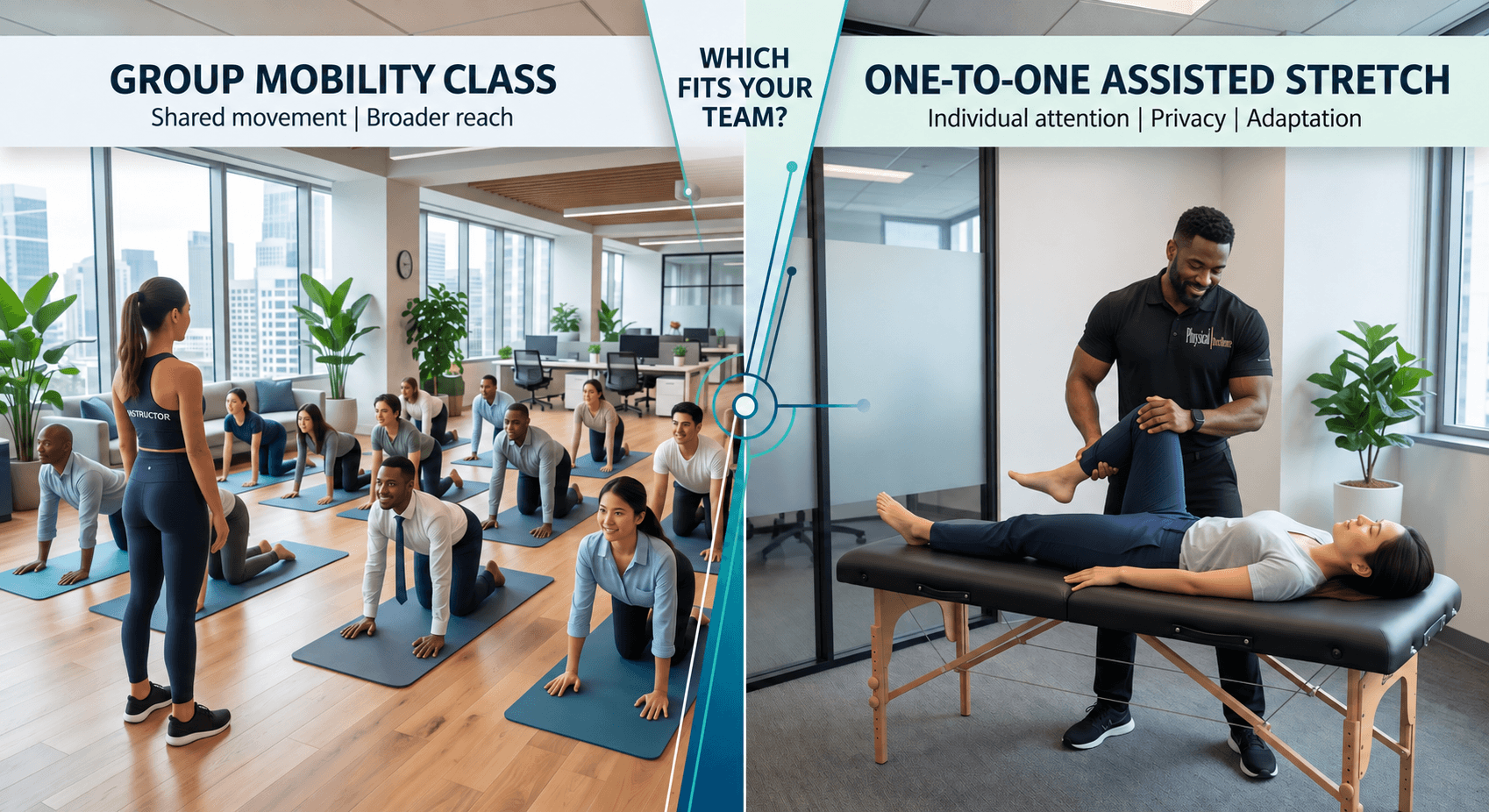
If you’re choosing a workplace physical wellbeing benefit, one question comes up quickly: why offer individual stretch appointments when a group mobility class can reach more employees at once? It’s a fair question. The answer depends on whether your priority is simultaneous reach, or individual attention, privacy and adaptation.
At a glance
Group mobility class | One-to-one stretch session | |
Reach per session | Higher — 15-20 people in one booking | Lower — one person at a time |
Individual adaptation | Limited, general movements for the room | Central to the format |
Privacy | Shared setting | Private appointment |
Health screening | Usually general | Individual, confidential |
Feedback | General group feedback | Individual ratings, reported only in aggregate |
Best suited to | Broad, simultaneous participation | Depth, privacy and individual attention |
Where group sessions work well
One instructor leads a room through a shared sequence — stretches, light mobility work, sometimes yoga-style movement. Everyone follows roughly the same routine, adapted in general terms rather than to any one person. A single 45-minute class can comfortably involve 15 to 20 people for one booking, and employees can join in without any prior conversation about what they specifically need. That reach is real, and it’s why group classes remain a popular starting point for workplace wellbeing.
Logistically, it’s also a simple format to run. One room, one instructor, one booking covers a large chunk of a team in one go. For an organisation wanting broad, visible participation without extensive individual scheduling, that operational simplicity is a genuine advantage.
Where one-to-one sessions offer something different
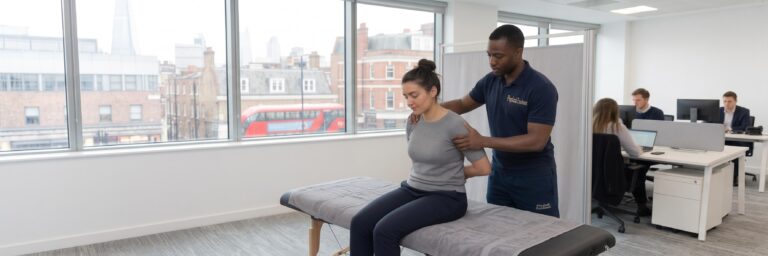
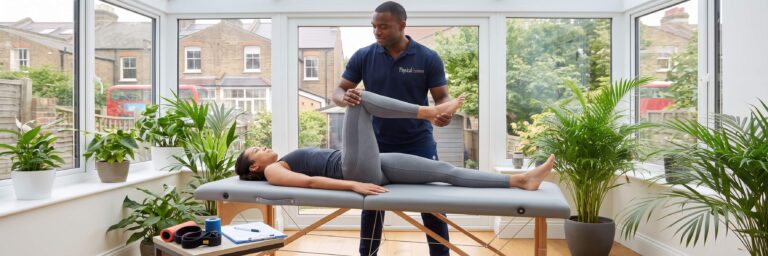
A practitioner works with one person for the full session, taking account of what that person’s body needs that day rather than running a routine built for a room. There’s a brief conversation up front — how they’re feeling, anything worth knowing — and the session adapts around it in real time.
This comes down to a structural point, not just a preference: individualised, hands-on guidance can only happen with one person at a time. That isn’t a criticism of group formats — it’s simply what each is and isn’t built for. A group class provides access to a shared activity; a one-to-one appointment provides each participating employee with a private, personally responsive session. For more on what that actually involves, see what an on-site wellbeing day looks like.
Employers who value privacy, individual participation without performing in front of colleagues, accommodation for different movement capabilities, and structured, measurable one-to-one time tend to find this format worth the trade-off in reach.
Screening, privacy and appropriate boundaries
In a group setting, it’s difficult for one instructor to screen and adapt to each person’s individual circumstances while running the class for everyone else. Most group formats necessarily rely on broadly accessible movements and general modifications, rather than a session shaped around one person’s disclosed history.
One-to-one sessions work differently. Every participant completes a short, confidential health questionnaire before their appointment. That information goes to me directly — your organisation doesn’t see individual answers, only simple aggregated feedback if that’s something you’d find useful.
Where someone discloses an injury or health condition, the one-to-one format allows their circumstances to be considered privately, and the session adapted, postponed or, where appropriate, not carried out at all that day. Assisted stretch therapy isn’t a substitute for medical assessment or physiotherapy — where something needs proper clinical attention, that’s the right next step, not a stretch session worked around it.
It’s also worth being clear that neither format replaces an employer’s existing responsibilities. For workers covered by the Display Screen Equipment Regulations, employers have duties including workstation assessment, reducing identified risks, appropriate breaks or changes of activity, and providing relevant information and training. A stretch session, in either format, sits alongside those measures as one part of a broader approach — it doesn’t replace them.
How to choose
Depends on what you’re trying to achieve. Choose a group class when the priority is giving a larger number of employees access to a shared activity at the same time. Choose one-to-one sessions when the priority is private, individually responsive attention that a shared class structurally can’t provide — offered through voluntary appointments rather than employees being selected according to an assumed level of need.
Both can work alongside each other rather than as a strict either/or — a group class as a broad, ongoing benefit, one-to-one sessions available as individual bookings alongside it. There’s no rule that says it has to be one or the other.
How the Physical Excellence pilot works
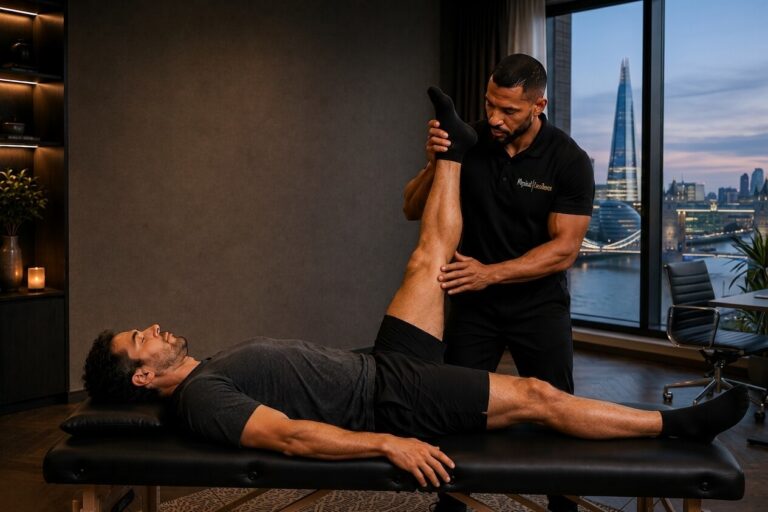
I offer a complimentary, no-obligation half-day pilot of up to four hours on-site. It provides up to eight fully clothed, table-based appointments of 30 minutes each, delivered privately and personally by me. Participants can record a simple before-and-after comfort or ease-of-movement rating, with only anonymised, aggregated feedback shared with your organisation. It gives your team a practical way to experience the service before considering anything longer term.
A few questions HR and facilities teams ask
Can group classes be adapted for people with injuries?
To some extent, though a shared format has real limits on how much it can individualise for any one person while still running for the whole room.
Is one-to-one always the better choice?
Not necessarily — depends what you’re trying to achieve. If broad reach across a large team matters more than individual depth, a group class may be the more sensible fit for your budget and goals.
Can we run a group class and one-to-one sessions together?
Yes — a group class can work as an ongoing, broad benefit, with one-to-one appointments available separately for anyone who wants that level of individual attention.
Does the health questionnaire information go to HR?
No. It comes to me directly and stays confidential. If you’d find it useful, I can provide simple aggregated feedback across a session — never individual health details.
How much space does each format need?
A group class needs enough floor space for everyone to move without bumping into each other or nearby furniture. A one-to-one session needs room for a treatment table — smaller footprint per session, but the space is used one person at a time rather than all at once.
Weighing up a group class against individual appointments for your team? If privacy, individual attention and responsive delivery are the priorities, enquire about a complimentary half-day Physical Excellence pilot. It’s a practical, no-obligation way to assess whether one-to-one assisted stretch therapy fits your workplace.