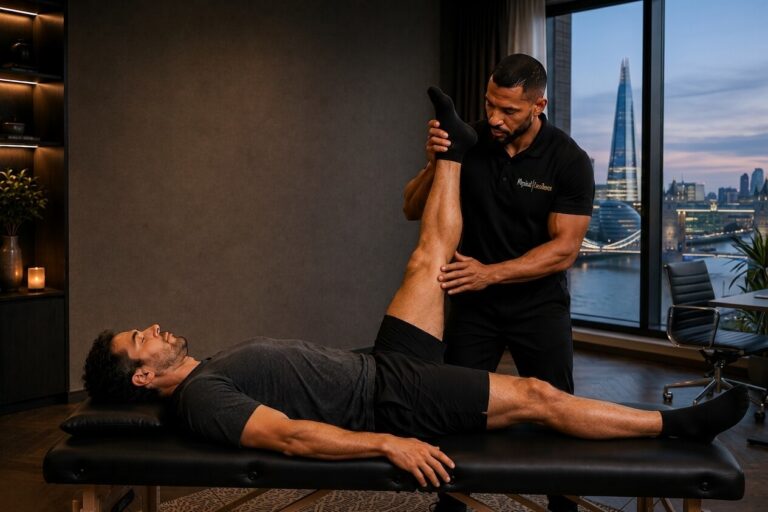
Tight hips. Stiff shoulders. That feeling of always needing to stretch—but never quite getting relief.
If any of that sounds familiar, your body might be asking for more than a quick stretch or foam roll.
Stretch therapy, especially Fascial Stretch Therapy (FST), is a form of assisted stretching that targets the fascia—the connective tissue that surrounds your muscles, joints, and organs. It improves mobility, eases tension, and restores joint function in ways traditional stretching often can’t.
But how do you know when it’s time to try it?
Here are five common signs that your body may benefit from stretch therapy.
1. You’re Always Tight, No Matter How Much You Stretch
If you’re stretching regularly but still feel tight and restricted, the problem may lie deeper than your muscles. Tight fascia doesn’t respond well to static stretches alone.
FST helps by releasing restrictions through assisted, multi-joint movements and traction—creating space and restoring fluidity throughout the body.
2. Your Posture Is Slipping—Especially at the Desk
Hours at a computer can take a toll on your posture. If you’ve noticed rounded shoulders, a stiff neck, or tight hips, your fascia may have adapted to that position.
Stretch therapy can help undo these patterns by targeting postural imbalances and improving joint alignment—without needing to “push through” pain or tightness.
3. Your Joints Feel Stiff or “Locked Up”
If you avoid overhead reaching, twisting, or certain movements because your joints feel stuck, stretch therapy offers more than muscle relief. Unlike massage, it includes gentle joint mobilisation and traction to improve range of motion and joint glide.
It’s especially effective for stiff hips, shoulders, spine, and ankles.
4. You’re Active but Always Recovering
Even people who train regularly can feel constantly tight or slow to recover. If you’re doing the work but not moving well, FST helps by improving circulation, reducing joint load, and supporting better recovery.
It’s a great complement to personal training, running, strength work, or any active lifestyle.
5. You’ve Lost the Freedom to Move Comfortably
Maybe it’s harder to get up from the sofa. Maybe you’ve stopped squatting, lunging, or rotating because it just doesn’t feel right anymore.
You don’t need to be flexible to start stretch therapy—you just need to want to move more freely again. That’s what it’s for.
Is Stretch Therapy Right for You?
If any of these signs feel familiar, stretch therapy could help you move and feel better—without strain or force.
At Physical Excellence, we offer Fascial Stretch Therapy in London, tailored to your posture, lifestyle, and goals.
👉 New to FST? [Discover our stretch therapy services in London]